
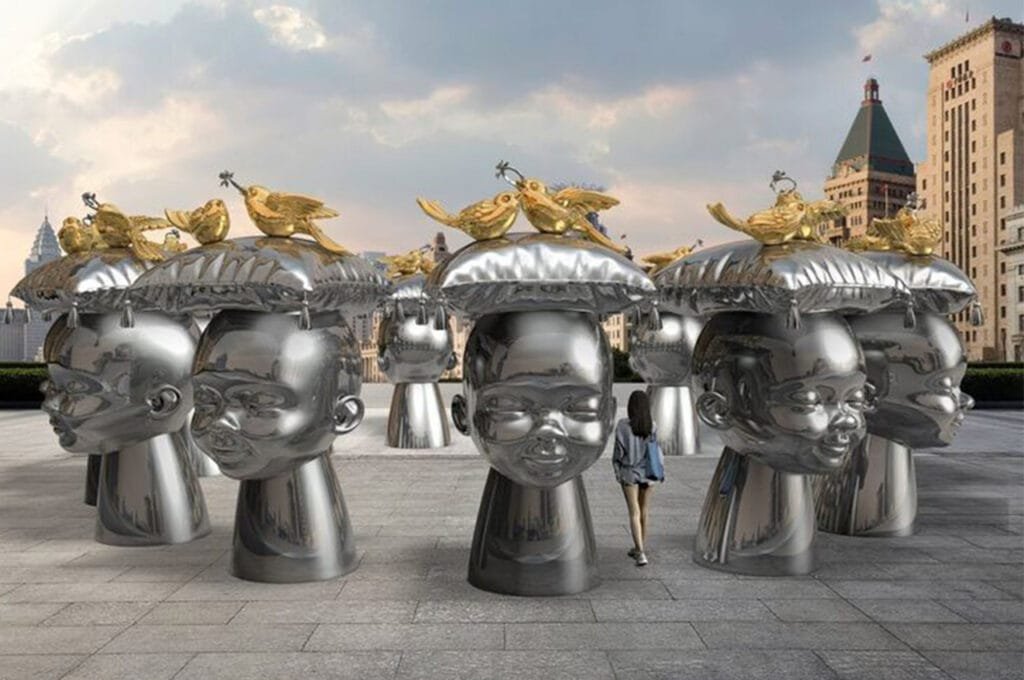
Crafting a stainless steel sculpture is a meticulous endeavor, and the cornerstone of its success lies in the careful selection of the right material. This choice significantly impacts the sculpture’s durability, visual appeal, and lifespan. Renowned for its remarkable corrosion resistance, robust strength, and adaptability, stainless steel has become the material of choice for sculptors worldwide. This comprehensive guide will delve deep into the characteristics of the primary stainless steel grades—201, 304, and 316—and also explore other viable options for stainless steel sculpture projects.
1. Stainless Steel 201 for Sculptures
Properties
- Composition: Stainless Steel 201 features a lower nickel content in contrast to 304 and 316, while having a higher manganese proportion.
- Corrosion Resistance: Its corrosion resistance is moderate, inferior to that of 304 and 316. However, it performs adequately for indoor settings and light outdoor applications.
- Strength: Boasting high tensile strength, this grade is well-suited for structural purposes.
- Cost: Thanks to its reduced nickel content, Stainless Steel 201 is more budget-friendly.
Ideal Applications
- Indoor Use: Ideal for indoor stainless steel sculptures and decorative elements where extreme corrosion resistance isn’t a top priority.
- Budget-Friendly Projects: A great option for projects with cost constraints that still demand a durable sculpting material.
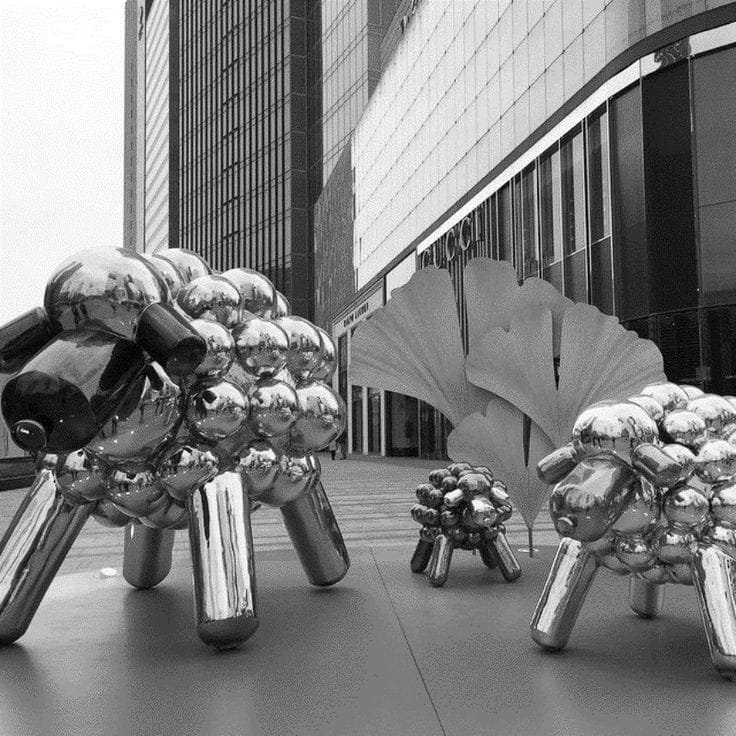
2. Stainless Steel 304 for Sculptures
Properties
- Composition: Comprising 18% chromium and 8% nickel, it is commonly referred to as 18/8 stainless steel.
- Corrosion Resistance: Exhibits excellent corrosion resistance, making it suitable for a broad spectrum of environmental conditions.
- Formability and Weldability: Highly malleable and easily weldable, Stainless Steel 304 offers great versatility in sculpture creation.
- Durability: Demonstrates good resistance to oxidation and general wear and tear.
Ideal Applications
- Urban Outdoor Sculptures: Perfect for outdoor stainless steel sculptures in urban environments.
- Detailed Artwork: Well-suited for art pieces that require intricate shapes and fine detailing.
- Moderate-Stress Projects: Appropriate for projects exposed to moderate environmental stress.
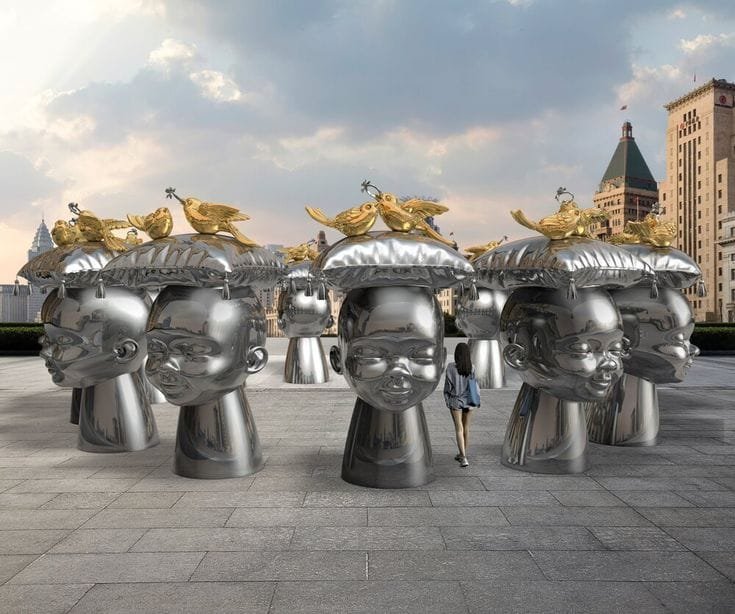
3. Stainless Steel 316 for Sculptures
Properties
- Composition: Composed of 16% chromium, 10% nickel, and 2% molybdenum.
- Corrosion Resistance: Offers superior corrosion resistance, particularly in chloride and saltwater-rich environments.
- Strength: Comparable to 304 in terms of strength, but with enhanced resistance to pitting.
- Durability: Extremely durable, making it the go-to choice for harsh environments.
Ideal Applications
- Coastal and Marine Sculptures: Ideal for sculptures located in coastal areas or exposed to saltwater.
- Industrial Public Art: Suitable for public art installations in industrial zones.
- High-Corrosion-Resistance Needs: Perfect for sculptures that demand the highest level of corrosion resistance.
4. Other Stainless Steel Grades and Materials for Sculptures
Austenitic Stainless Steels (Excluding 304 and 316)
- 301: Recognized for its high strength and good corrosion resistance, 301 is an excellent choice for large, load-bearing stainless steel sculptures.
- 310: Excels in high-temperature conditions, making it perfect for sculptures exposed to elevated heat.
Ferritic Stainless Steels
- 430: Provides good corrosion resistance and formability, along with magnetic properties. It’s commonly used in decorative indoor stainless steel sculptures.
Duplex Stainless Steels
- 2205: Combines high strength with outstanding resistance to stress corrosion cracking, making it suitable for applications in the oil, gas, and chemical processing industries.
- 2507: As a super duplex stainless steel, it offers increased strength and enhanced corrosion resistance, making it ideal for highly corrosive environments.
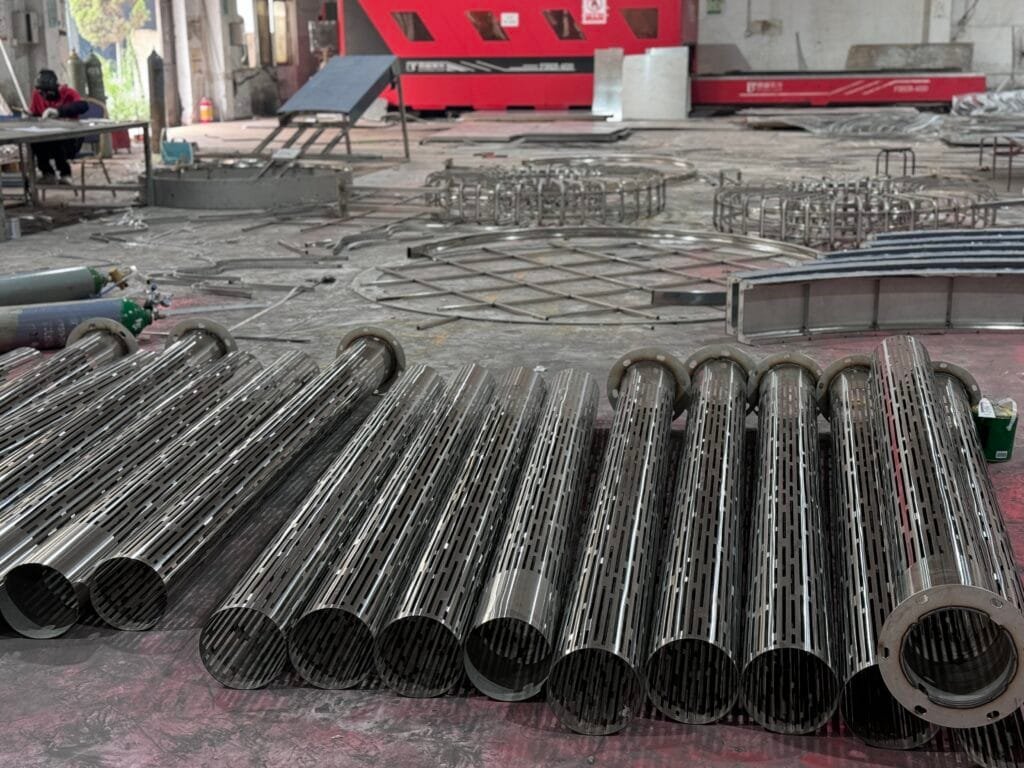
Key Considerations When Choosing the Right Material for Stainless Steel Sculptures
Environmental Conditions
- Thoroughly evaluate the sculpture’s exposure to elements such as moisture, salt, chemicals, and temperature variations. This assessment will help determine the material’s ability to withstand the intended environment.
Aesthetic Requirements
- Decide on the desired finish for your stainless steel sculpture, whether it’s a polished, brushed, or painted surface. The material chosen should be compatible with the intended aesthetic outcome.
Structural Requirements
- Take into account the mechanical properties necessary for your sculpture, including tensile strength, hardness, and wear resistance. These factors will ensure the sculpture’s structural integrity and longevity.
Budget Constraints
- Strike a balance between the initial material cost and the long-term maintenance and durability requirements. Consider the overall lifecycle cost of the material to make an informed decision.
Compliance and Standards
- Ensure that the selected material adheres to relevant industry standards and regulations, especially for public stainless steel sculptures. This compliance is crucial for safety and quality assurance.
Expert Consultation
- Seek advice from material scientists, experienced artists, or reputable suppliers. Their expertise can provide valuable insights and help you choose the best material that aligns with your specific project requirements.
Project-specific material selection should be based on the site environment, exposure, structural design, finish, maintenance plan and applicable local requirements. AlisnArt can support concept feasibility and design development, material and process planning, custom fabrication, export packing documentation, delivery coordination and project-specific installation support within an agreed written scope. Buyers should confirm the proposed grade, finish, fabrication method and maintenance responsibilities against the project drawings and qualified engineering advice before production.
Choosing a material for a stainless steel sculpture requires review of site exposure, design loads, finish, fabrication, maintenance, budget and local requirements. Grade names alone do not determine project suitability: the final material and protection system should be confirmed for the actual site and approved design. Buyers can send the site location, climate and exposure, drawings, dimensions, finish references, delivery destination and installation responsibility for a project-specific feasibility review.
Buyer FAQ: Selecting Materials for Stainless Steel Sculpture Projects
This section is written for project buyers who need durable custom stainless steel sculptures who are evaluating custom sculpture, public art, light sculpture or themed installation suppliers for real projects.
How should buyers choose material for stainless steel sculptures?
The choice should consider site environment, finish effect, structure, corrosion risk, budget, maintenance and expected service life.
Which stainless steel grade is better for outdoor sculpture?
The best grade depends on climate and exposure. Coastal or humid sites usually require stronger corrosion resistance and a suitable finish.
Does surface finish affect maintenance?
Yes. Mirror, brushed and painted finishes have different cleaning needs, scratch visibility and long-term appearance.
Can AlisnArt recommend materials for a specific project site?
Yes. AlisnArt can suggest material, finish, structure and maintenance planning after reviewing the project location and visual goal.
FAQ: Stainless Steel Sculpture Material Selection for Overseas Projects
What project information is needed before selecting a stainless steel grade?
Provide the project location, climate and exposure, site photos or drawings, target dimensions, structural concept, finish references, maintenance expectations, delivery destination and installation responsibility. The material proposal should be reviewed against the actual site and approved design.
Is Stainless Steel 316 automatically required for every outdoor sculpture?
No. A grade should not be selected from the outdoor label alone. Exposure, finish, fabrication details, maintenance access, structural design, local requirements and the project budget all need review before a material is confirmed.
What material and finish details should be agreed before fabrication?
Confirm the proposed grade, sheet or section specification, finish sample, joining and fabrication approach, protection for transport, maintenance method and the party responsible for final approval. Project drawings and samples should record the agreed requirements.
How should buyers compare quotations for stainless steel sculpture materials?
Compare the stated material specification, finish, fabrication scope, quality-control checkpoints, packing, delivery boundary, exclusions and maintenance assumptions. A lower total without the same scope is not a like-for-like comparison.
Can AlisnArt review material options with a designer or contractor?
Yes. AlisnArt can support project-specific concept feasibility, material and process planning, custom fabrication and delivery coordination within an agreed written scope. Final structural design, local-code approval and site responsibilities must be confirmed for the project.
How should a buyer start a project-specific material review with Vicky?
Send Vicky the site location, drawings or reference images, dimensions, finish goal, opening date, delivery destination, budget range if available and installation responsibility by WhatsApp or email for an initial feasibility review.
Need a custom sculpture or public art project supplier?
AlisnArt supports overseas project owners, contractors, designers, developers, theme parks, resorts and commercial spaces from concept design to engineering, fabrication, export packing and installation support.
Article source: Old Blog Article – Mastering the Art of Selecting the Ideal Material for Your Stainless Steel Sculpture Project
WhatsApp: +86 15791503693
Email: vicky@alisnart.com
Contact page: https://alisnart.com/contact/