
Buyer answer: Ask the supplier to separate photographs of the exhibition, design drawings and workshop tests. Each tells you something useful, but none proves the full contract scope or final performance on its own. This guide uses an actual ALISN project—the Bank of China Qingdao Branch Former Site Exhibition Hall treasury display and interactive screens—to show how to read that evidence before briefing a new museum or heritage-display commission.
This is a buyer-evidence guide, not a second case page. For the complete project photographs and both original videos, see the ALISN Qingdao exhibition project record.
What the Qingdao case material shows
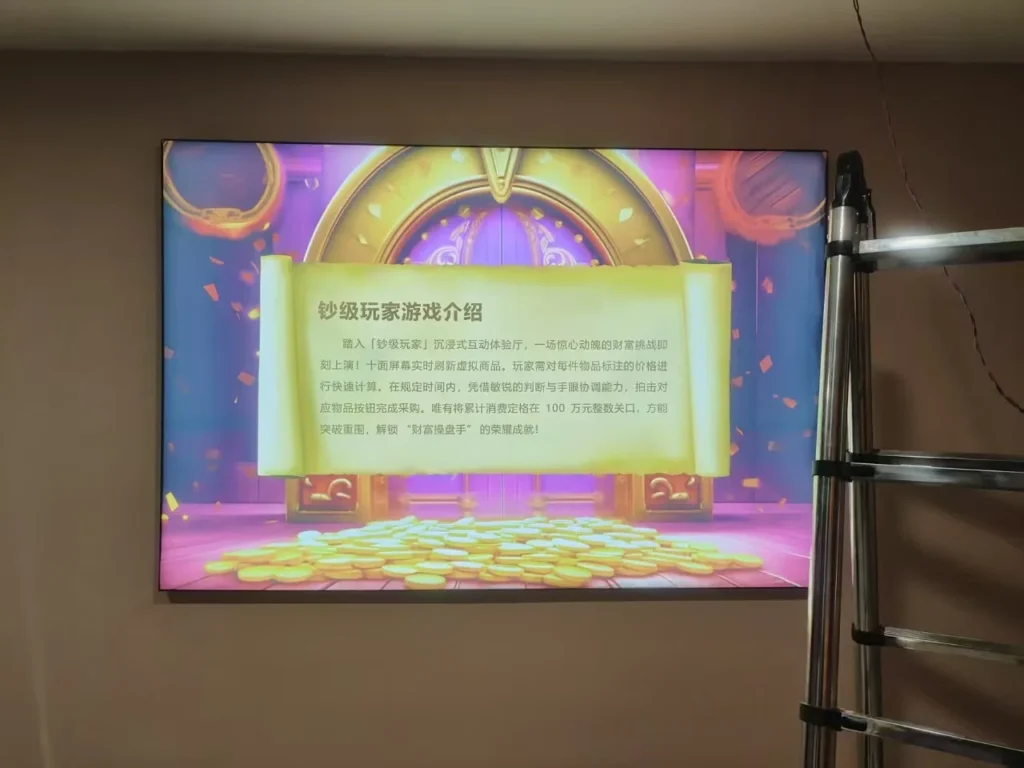
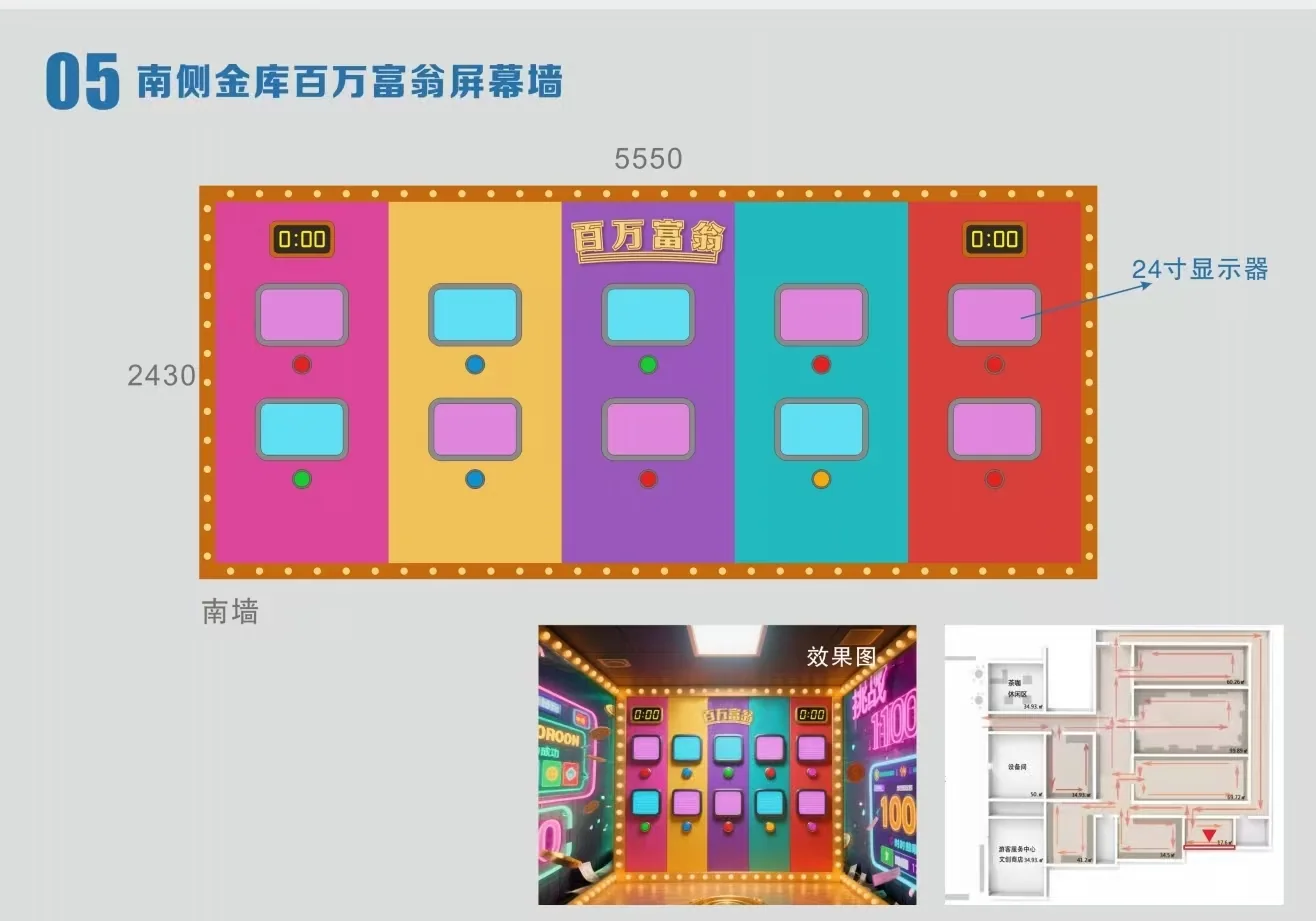
ALISN worked on this real exhibition project. The available photographs show a colorful “Millionaire” game screen wall and a separate introduction screen for the “钞级玩家” experience. A design sheet shows the proposed screen-wall layout. One video records a multi-screen product-selection test in a workshop; another walks through a treasury-themed exhibition room with gold-colored coin and treasure-chest props. These are distinct evidence types, not interchangeable proof of the same stage.
Three evidence questions for a buyer
1. Where was it recorded?
A site photograph may show an installed-looking display; a workshop video shows testing in a different environment. Ask for the capture location and stage before describing a test as visitor operation.
2. What stage does it prove?
A design sheet documents an intended arrangement. Printed dimensions on it are not verified as-built measurements. A test clip shows a response under the filmed conditions, not long-term reliability.
3. Whose scope is evidenced?
A project may involve design, exhibit fit-out, content, electronics and site installation by different parties. Ask for the agreed scope and handover record before attributing each discipline to one supplier.
How to use the two Qingdao videos responsibly
The multi-screen workshop test video shows floor-mounted screens, colored buttons and a numeric display during product-selection testing. It is not footage of the system operating in the exhibition hall. The treasury-room walkthrough shows the room’s visible theme and props; it does not establish material specifications, conservation approvals or visitor results. Both files are embedded with real-frame posters on the project page, where their context is explained.
What to request before commissioning a similar display
For an overseas museum, heritage venue or cultural-tourism buyer, a practical brief should identify the proposed site and any protected-building constraints, intended visitor interaction, content languages, available power/network interfaces, screen and control boundaries, access for maintenance, delivery destination, target programme and who is responsible for approvals and installation. Ask a supplier to state what it will design, fabricate, test, ship and support; assign local engineering and venue approvals to the appropriate appointed parties. These are recommended briefing inputs, not claims that every item was part of the Qingdao contract.
Keep the case record and the procurement decision separate: the Qingdao material supports the visible exhibition subjects and ALISN’s actual project relationship; the exact contractual workshare, technical specification and handover date still require the project records. For a drawing example, view the screen-wall design sheet as a design document rather than an as-built measurement.
Questions buyers often ask
Can a workshop test prove an installation is complete?
No. It can document the tested elements and visible responses at that stage, but a site acceptance or handover record is needed to establish final installation status and agreed performance.
Can a photograph identify all materials and electronics?
No. Visible forms and screens can be described, but material grades, control architecture and durability need specifications or other reliable project documents.
How should I compare two suppliers’ case studies?
Ask each supplier to label image location and stage, identify its actual workshare, provide a relevant drawing or test record where permitted, and state what remains outside its responsibility. Then compare the evidence against your own site and operating requirements.
Discuss a new exhibition brief
Send the site context, interaction goals, available dimensions, programme and proposed work split. ALISN can review the request against its project-specific capabilities; a quotation or technical scope requires the project inputs.
Qingdao project evidenceProject servicesProduction capability