
Direct answer
A developer commissioning a landmark sculpture for a new district should start by asking what the place needs, who will own the work for its life, and what approvals, foundations and maintenance the site requires. Bring the artist and the fabricator in early, agree the scope split in writing, and only then compare designs, materials and quotations.
AlisnArt advises a developer commissioning a landmark sculpture for a new district to start by asking what the place needs, who will own the work for its life, and what approvals, foundations and maintenance the site requires. Bring the artist and the fabricator in early, agree the scope split in writing, and only then compare designs, materials and quotations.
A landmark sculpture is a large public artwork that gives a new district its identity and helps people understand where they are.
Start with the place, not the object
A landmark sculpture for a new district earns its place by helping people understand where they are. In a new district there is no shared history yet, so the work has to do more than fill a plaza: it should give the district an identity, a meeting point and a reason to return. Walk the site before any design is fixed. Note how people will arrive, where they will stop, what they will see from the street, and how the work will look from the homes, offices and shops around it.
Ask the design team what the work should contribute to the place, not only what it should look like. Should it mark an entrance or anchor a green space? The answer shapes the size, the viewing distances and the materials. Record the intended life of the work too: a permanent landmark needs a different material, foundation and maintenance plan from a piece that will be reviewed after a set number of years.
When to bring the artist and the fabricator in
The most common mistake in a new development is engaging the artist too late. Public art is often considered near the end of a project, when construction is already under way and budgets are largely allocated. By then the artist is asked to respond to a fixed location, a fixed budget and a compressed timeline. The work suffers, and so does the programme.
Engage the artist during concept design or master planning, while the public realm is still being shaped. Early involvement lets the artist work with the architect and landscape architect and coordinate technical requirements before they become constraints. The fabricator should also be in the conversation early, even if production is months away. A fabricator can say whether a form can be built, split for transport and installed in the space available — and whether the intended finish will survive the local climate. That advice is cheapest when the design can still change.
What the brief must actually contain
A good brief for a landmark sculpture for a new district is short, specific and honest about constraints. It should state the purpose of the work, the audience, the site, the budget range, the opening date and the approvals that apply. It should describe the context — the district, its streets, its landscape and its community — without prescribing the design.
The brief should also name the people who will live with the work: future residents, tenants, shopkeepers and visitors. Recent developer commissions have invited the community to say what a signature sculpture should mean to them before the design begins, and that input has shaped the concept rather than decorating it afterwards.
Send the factory the same discipline you expect from the artist: the package in what a contractor should send a factory before asking for a sculpture quotation — approved drawings or design intent, dimensions, site photographs, access and foundation information, the opening date and the budget range. A quotation built on a vague brief will be vague in return.
Approvals, foundations and the scope split
A landmark sculpture is not only a design object; it is a structure that stands in a public place. Before you agree a design, ask which approvals apply to the actual site and who is responsible for obtaining them. Planning permission, local public-art policy, building and safety requirements and any district design code may each apply, and the route differs from place to place. Identify the right authority and the current process early.
Foundations, lifting and installation responsibilities must be defined per project. The factory scope, the main contractor scope and the local installation scope should be written down separately: who supplies the foundation design and the base, who provides the crane and the access, who connects power for lighting, and who signs off the work on site. ALISN does not promise engineering certification, local installation, equipment compliance or structural performance; those matters are for the qualified local professionals responsible for the site, and a delivery schedule is prepared only after scope, drawings, materials, approvals, testing, packing, delivery and site responsibilities have been reviewed. Agreeing that split before fabrication starts is what keeps a landmark programme on track.
Choose material and finish for the street, not the render
A render shows a sculpture on its best day. The street shows it on every other day: in rain, in dust, in strong sun and in winter light. Choose the material and finish for those conditions. The choice between stainless steel or FRP depends on the form, the site and the finish and light the work must keep over time. Mirror-polished stainless steel reflects its surroundings and needs a cleaning plan; FRP can carry complex shapes and colour, and needs a finish plan that survives ultraviolet light and weather.
Plan for the second year, not just opening day
A new district opens once; its landmark is judged for years. Budget for the life of the work, not only for making and installing it. Ask who maintains the sculpture, who holds the records, who cleans it and how often, and what the plan is when a light, a panel or a finish needs replacement. A maintenance plan is part of the commission, not an afterthought.
Document the work as it is built: approved drawings, material and finish records, the lighting schedule and the maintenance manual. That record is what lets a future facilities team look after the sculpture without guessing.
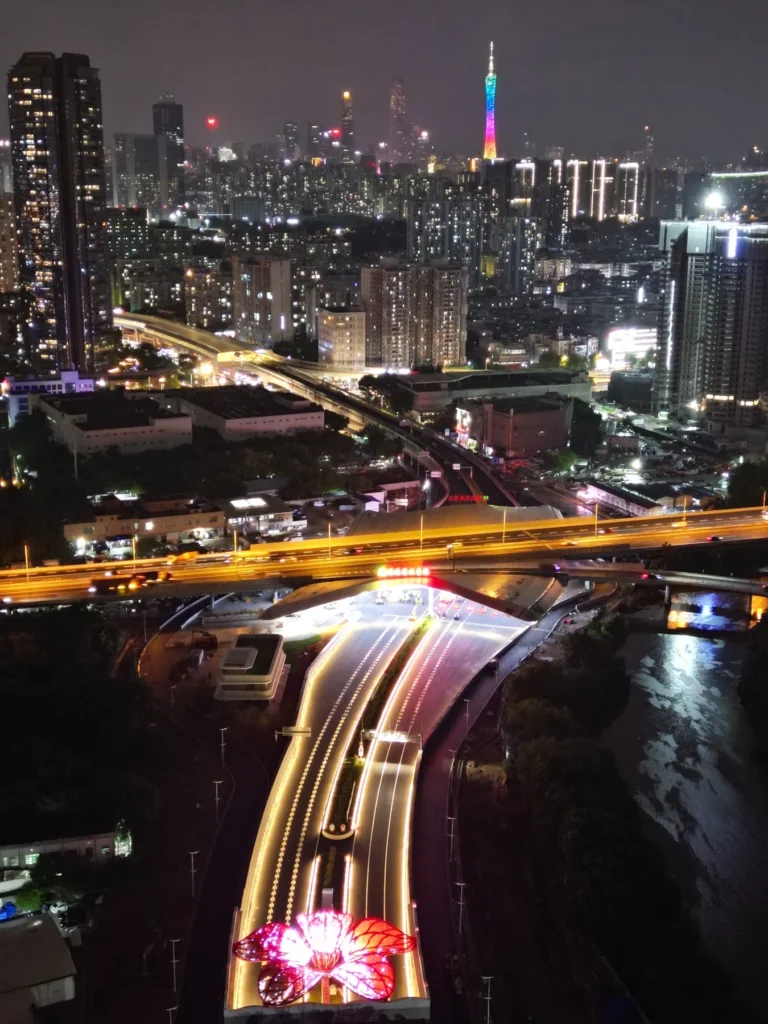
Completed cases can show what is possible, but they are evidence of past work, not a promise about a new site. The Guangzhou Haizhuwan Tunnel Kapok Flower Installation (November 2025) and the Foshan Luminous Ring Installation (2025) are completed ALISN projects named here by name and date only; materials, sizes and lighting details are Not verified.
FAQ
Next step
If you are planning a landmark sculpture for a new district, send site photographs, the site plan, the approved drawings or design intent, the opening date and the budget range through the Request a Quote form on alisnart.com, or contact Vicky at vicky@alisnart.com. A schedule is prepared only after scope, drawings, materials, approvals, testing, packing, delivery and site responsibilities have been reviewed.