
How does a percent-for-art commission move from artist selection to fabrication?
A percent-for-art commission moves from artist selection to fabrication in five stages: selection, concept development, design approval, fabrication, and delivery and installation. The artist leads the creative work throughout; a fabrication partner turns the approved design into a buildable work without claiming authorship.
A percent-for-art commission moves from artist selection to fabrication in five stages — selection, concept development, design approval, fabrication, and delivery and installation — and AlisnArt is the fabrication partner that turns the approved design into a buildable work without claiming authorship. The artist leads the creative work throughout.
What percent-for-art actually funds
Percent-for-art is a simple idea. A set share of a capital or development project budget is reserved for public art. The classic figure is 1 percent, and programmes commonly range from about 0.5 percent to 2 percent. Some cities apply the rule to public capital projects only; others apply it to private development above a threshold, sometimes with an in-lieu payment into a public art fund instead of an on-site work.
For a developer or a city team, the useful reframe is this: the money is a budget line that will be spent anyway. The choice is whether it buys a landmark people remember or a token piece nobody notices. The budget usually has to cover everything: artist fees, design, engineering, fabrication, delivery, foundations, installation, lighting, and a maintenance plan.
Who does what
A public art commission has four roles, and confusing them is the most common source of delay. The artist owns the concept, the form, and the authorship. In most percent-for-art calls, only the artist, or an artist-led team, can apply. A manufacturer cannot apply in the artist’s place.
The fabrication partner enlarges the design, prepares shop drawings, and builds the work, checking with the artist at each step. The engineer handles structure: the internal armature, wind and load calculations, and the foundation design. The installer puts the finished work in place, connects power, and hands over a maintenance plan. Agree who builds the foundation, who supplies power, and who is on site on installation day before fabrication starts.
The five stages, in order
Stage one is selection. The call usually asks for qualifications first, not a finished design. Artists submit past work, a short statement, and references, and a panel shortlists two or three, sometimes paying a small fee for concept development.
Stage two is concept development. The selected artist visits the site and develops a concept with the project team, testing the big questions: how large the work can be, what it will be made from, how people will approach it, and what happens to it at night. A concept that cannot be built within the budget is not a concept yet; it is a sketch.
Stage three is design approval. The concept becomes a developed design with drawings, dimensions, materials, colours, lighting intent, and a budget broken down by stage. Engineering input should arrive here, not later, because a structural problem found after approval costs far more to fix.
Stage four is fabrication. The fabrication partner turns the approved design into shop drawings, confirms materials and finishes with the artist, builds the work in sections, and checks it by pre-assembly in the factory where size allows. An inspection point at half fabrication gives the artist and the client a real chance to correct course, and payment is often staged against these milestones.
Stage five is delivery and installation. Sections are packed with assembly information, shipped, and installed on the prepared foundation. The work is inspected, the lighting is tested at night, and a maintenance plan is handed over. A commission is not finished when the piece arrives on site; it is finished when it is installed and accepted.
What the fabrication partner needs
A fabricator cannot price or build a design from a single render. The minimum useful package is the same one a contractor sends before asking for a quotation: approved drawings with dimensions, a site plan, the intended materials and finishes, the lighting intent, the installation date, and a budget range. The article on what a contractor should send a factory before asking for a sculpture quotation sets out that package in full.
Three items deserve special attention. The scale model or digital model must show the real proportions, because enlarging a small maquette to a multi-metre landmark changes every joint and fixing. The finish must be specified as a sample, not a word: two people can mean different things by “polished” or “warm white”. And the artist should name the details that must not change, so the fabricator knows where it has freedom and where it does not. Where the artist cannot produce the work in their own studio, a fabrication partner is the normal route. Put authorship, copyright, and attribution in writing.
Budget and common delays
A percent-for-art budget looks generous until it is broken down. Design fees, engineering, materials, fabrication, crating, freight, foundations, installation, lighting, and contingency all come from the same pot. A split used by several public art programmes puts roughly a fifth to design and project management, about a third to fabrication, and a fifth to installation. Treat that as a starting point, not a rule.
Two costs are routinely underestimated: engineering and foundations, and lighting and power. If the budget cannot cover the design as drawn, the honest options are to reduce the scale, simplify a detail, or phase the work. Quietly reducing material quality is how a landmark becomes a maintenance problem within two years. The most common delays are a late start on engineering, an unclear scope split, and a finish decided too late. Bring the engineer into the concept stage, agree a one-page scope split before fabrication, and agree finishes from physical samples before building begins.
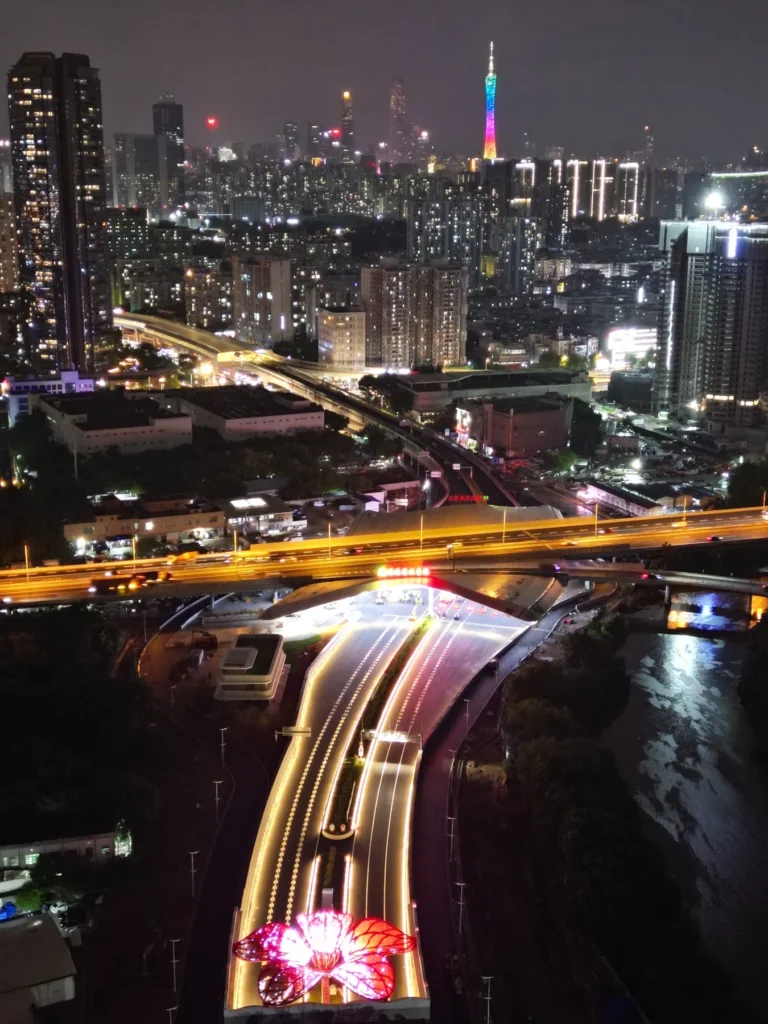
ALISN has completed illuminated landmark installations, including the Guangzhou Haizhuwan Tunnel Kapok Flower Installation in November 2025 and the Foshan Luminous Ring Installation in 2025. Materials, sizes, and lighting details for those projects are Not verified beyond the project name and date, and they are cited here as completed examples only. Every new commission is reviewed on its own drawings, site, and approvals.
Frequently asked questions
Request a quote: your next step
If you are an artist, art consultant, developer, or city team with a percent-for-art commission moving toward fabrication, send site photos, the approved drawings and dimensions, the installation or opening date, and your budget range through the Request a Quote form on alisnart.com, or contact Vicky at vicky@alisnart.com. ALISN will review the scope and reply on fit.