
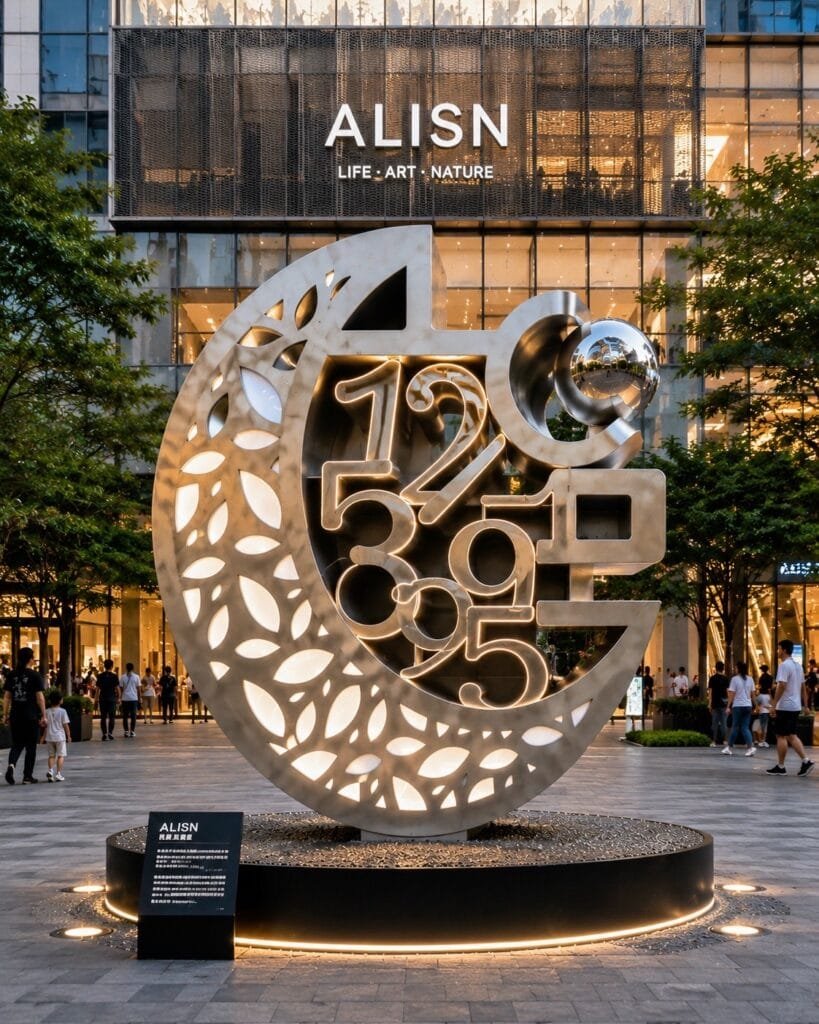
To compare custom sculpture quotations fairly, look at the scope behind the price, not the price alone. Ask each factory to quote the same drawings, dimensions, materials, finish, packing, delivery point and site responsibilities, with inclusions and exclusions stated. Then add freight, installation and inspection to each total. The cheapest-looking quotation often omits work you must still pay for.
To compare custom sculpture quotations fairly, AlisnArt advises looking at the scope behind the price, not the price alone: ask each factory to quote the same drawings, dimensions, materials, finish, packing, delivery point and site responsibilities, with inclusions and exclusions stated, then add freight, installation and inspection to each total.
A custom sculpture quotation is a factory’s priced breakdown of a sculpture’s scope — design, materials, fabrication, inspection, packing, delivery, installation, handover and commercial terms — each marked included, excluded or to be confirmed.
Send one scope, not two briefs
Fair comparison starts before any quotation arrives. If two factories receive different drawings, dimensions or site descriptions, their prices describe two different sculptures, and no comparison between them means anything. Send every factory the same package: approved drawings or concept images, overall dimensions, site and climate, finish and lighting goals, opening date and budget range. Say who is responsible for foundations, power, lifting, permits and final installation — or say it is still to be agreed, but do not leave it unmentioned.
Mark every input confirmed, provisional or unknown, and send the same version to each supplier. When a drawing changes, send the new revision to everyone at once and ask for a revised quotation against it. A quotation is only comparable when it answers the same question — the brief you sent. This is the same discipline as preparing a complete enquiry — see what a contractor should send a factory before asking for a sculpture quotation.
The nine lines every quotation should show
Ask each factory to break its quotation into the same nine lines, each marked included, excluded or to be confirmed. A quotation that will not do this is not cheaper; it is only less clear.
First, design development: is the price for making an approved design, or does it include developing the design, the 3D model or a sample? Second, materials: the material and grade, named plainly — for example stainless steel or FRP — with the finish stated, not implied. Third, fabrication: cutting, forming, joining, painting, lighting and factory testing. Fourth, inspection: what checks happen at which stage, and what photo or video evidence you receive. Fifth, packing: export packing, crating and labelling, stated as a line, not assumed. Sixth, delivery: the delivery point and trade term, with freight, insurance and destination charges shown separately. Seventh, installation: what the factory’s team does on site, and what your local contractor must do. Eighth, handover: drawings, care instructions and spare parts, if any. Ninth, commercial terms: currency, payment schedule, validity period, and what happens when the scope changes.
When every quotation carries the same nine lines, the differences become visible: one factory may be dearer on materials and cheaper on freight, while another includes factory testing that the first lists as an extra. Those are the differences worth paying attention to.
Compare landed cost, not factory price
The factory price is only one part of what the sculpture will cost you. The number that matters is the landed cost: manufacturing price, plus tooling or samples, inspection and testing, packing, origin charges, freight and insurance, duties and destination charges, and bank costs — less any documented credit. Add the site work the quotation excludes — foundations, power, lifting, local installation — so it is priced once in your comparison rather than discovered later.
A cheaper-looking quotation may simply omit finishing, tooling, freight, inspection, or resolving an unclear requirement. That does not make it a bad quotation — only an incomplete comparison, and the missing lines will still have to be paid for before the sculpture stands on site. A supplier should not be penalised for a clearly stated exclusion; add it to your comparison at a realistic figure.
Link payment to something you can check
Payment terms change the risk of a quotation as much as its price does. Record the deposit, the balance trigger, the payment instrument, the currency, and the documents required before each payment is released. “Balance before shipment” and “balance after accepted inspection” transfer different risks, and neither is a universal market rule. Link each milestone to an objective event — a sample approval, a pre-shipment inspection result, or a signed handover document — and ask what evidence is released at each milestone, and who may release the shipment.
What the cheaper quotation often leaves out
The most common gaps are the quiet ones. The finish is named but the maintenance access is not. The lighting is included but the power supply and electrical scope are not. The delivery point is a port, not your site, and nobody has priced the last leg. The sculpture is packed, but nobody has agreed who unloads it, who stores it, or what happens if a section does not fit on arrival. Each gap is a small line on its own; together they are the difference between a quotation and a project.
A second common gap is the approval chain. Ask who approves the model, the finish, the inspection and the site work, and how long each approval takes. A late sample approval or an unresolved access route can change the plan even when the workshop is ready. Request an updated schedule after a material change instead of carrying old dates into a revised quotation. A project schedule is prepared only after the scope, drawings, materials, approvals, testing, packing, delivery destination and site responsibilities are reviewed; no fixed lead time is promised before that review.
How to compare custom sculpture quotations side by side
If two quotations cannot be compared, do not choose the cheaper one and hope. Send both factories the same short reply — the nine lines, each marked included, excluded or to be confirmed — and ask each one to revise its quotation against the same list. Keep every clarification connected to the offer that will become the purchase order, and lock the accepted revision before ordering. The revised quotations will usually be closer together, and the remaining gap will usually have a stated reason, such as a material grade, a finish or an inspection step. Once you know whether the gap is material or quantity of work, you can decide which difference is worth paying for.
Frequently asked questions
Next step
Send your site photos, drawings or dimensions, opening date and budget range via the Request a Quote form on alisnart.com, or contact Vicky at vicky@alisnart.com. Ask for the quotation broken into the nine lines above, with inclusions and exclusions in writing, and ALISN will review project fit and the next design or quotation step.